AI in Work Travel Report: What’s changing, and what’s staying human
Your newest travel companion knows your favorite airline, never forgets a receipt and might soon decide whether you should travel at all. Engine’s new research explores how AI is changing the business trip, and what we’d rather keep human.

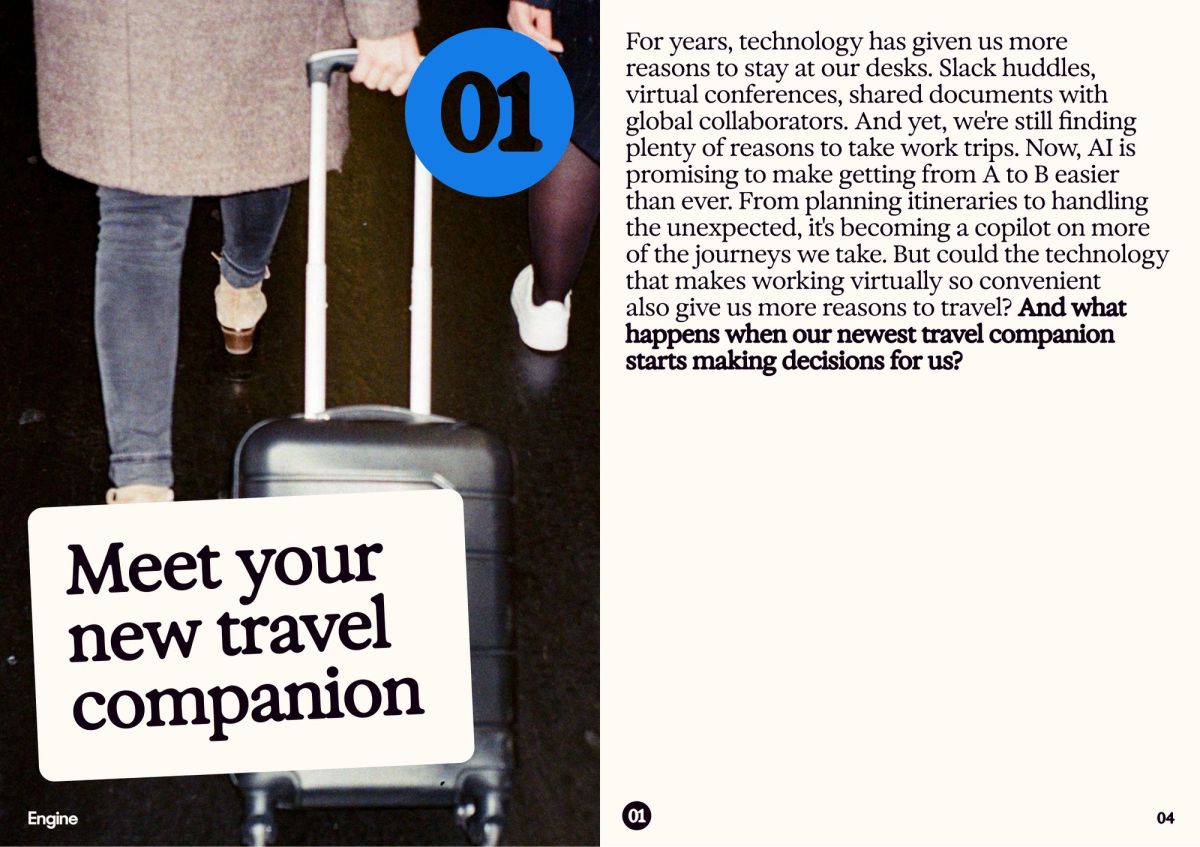
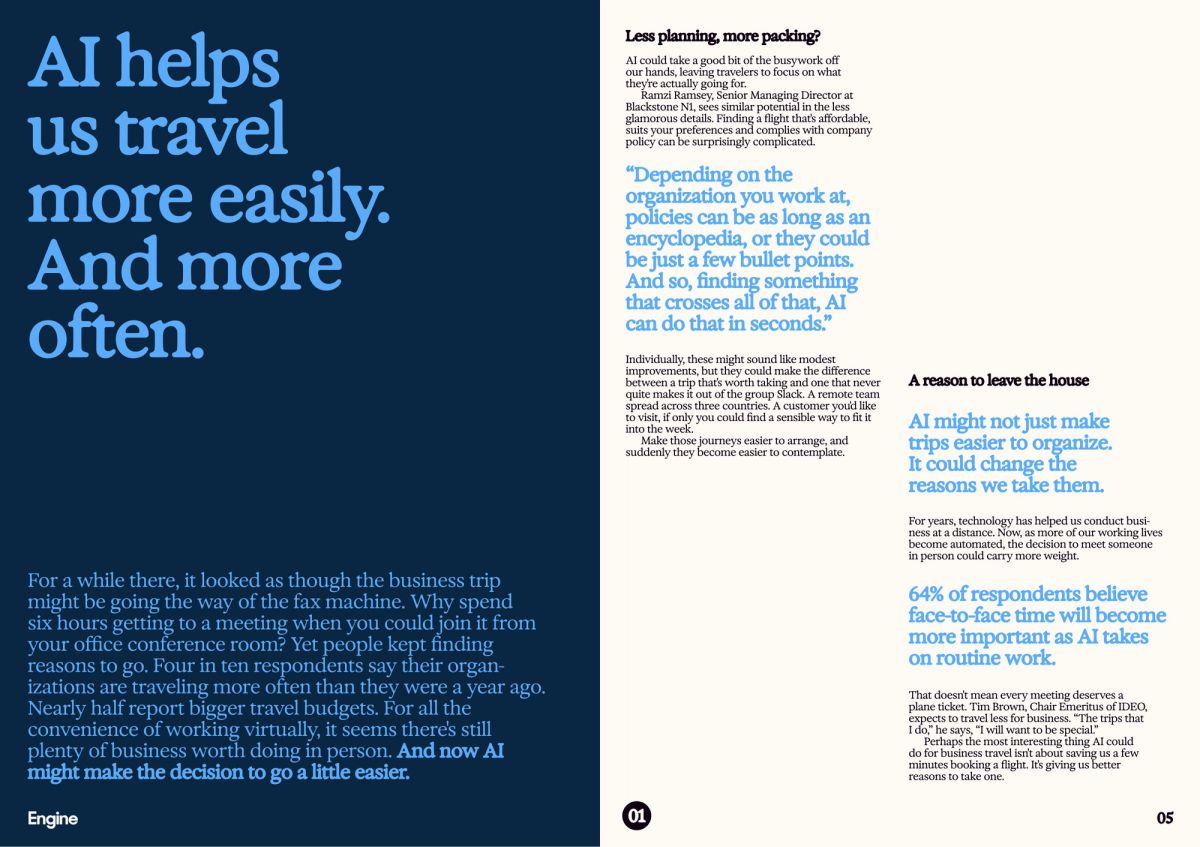
For a while there, it looked as though the business trip might go the way of the fax machine. Why spend six hours getting to a meeting when you could join it from the office conference room?
Yet people kept finding reasons to go.
Now AI is promising to make it easier than ever to get there. It can find your flights, book your hotel and sort out your expenses. Not bad for a travel companion that doesn’t even need a seat.
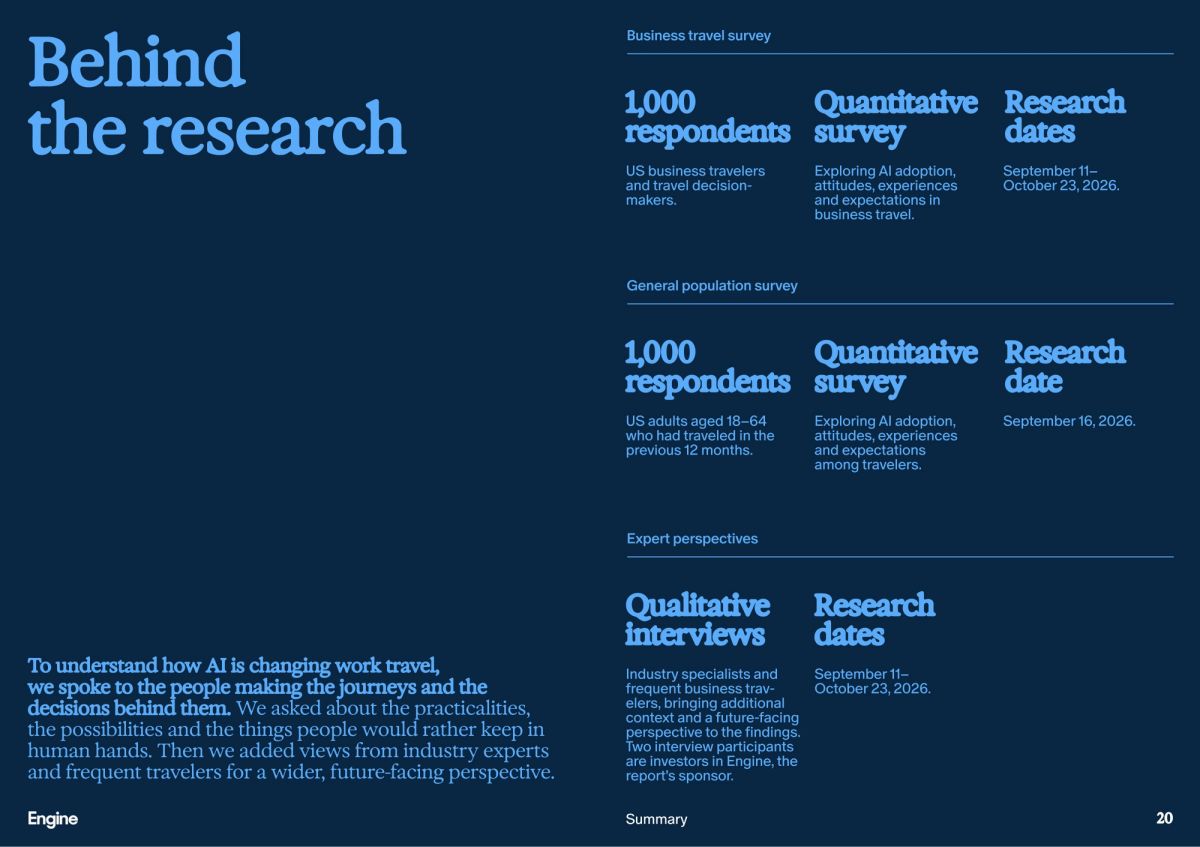
But how much of the journey are we ready to hand over? To find out, we surveyed 1,000 U.S. business travelers and decision-makers, and spoke to industry experts about what the future might hold.
Here’s what caught our attention.
In AI we trust (to a point)
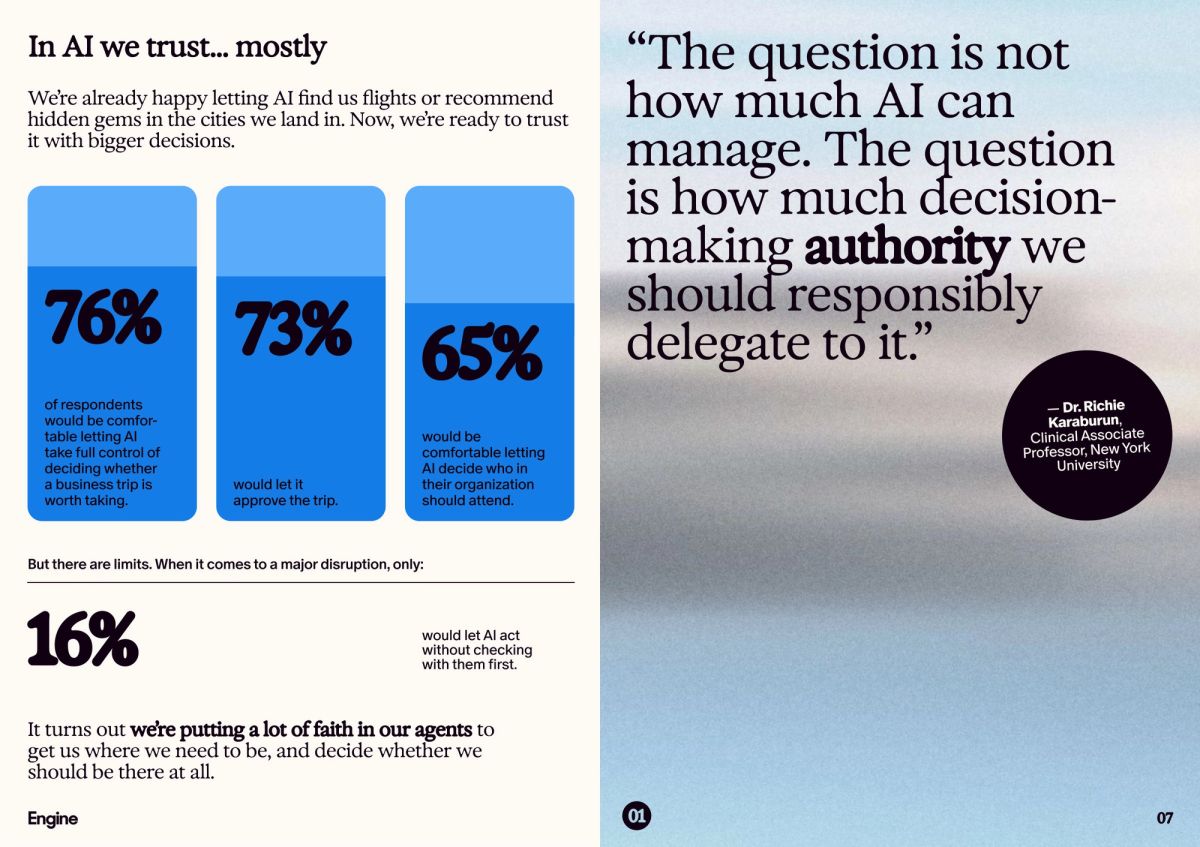
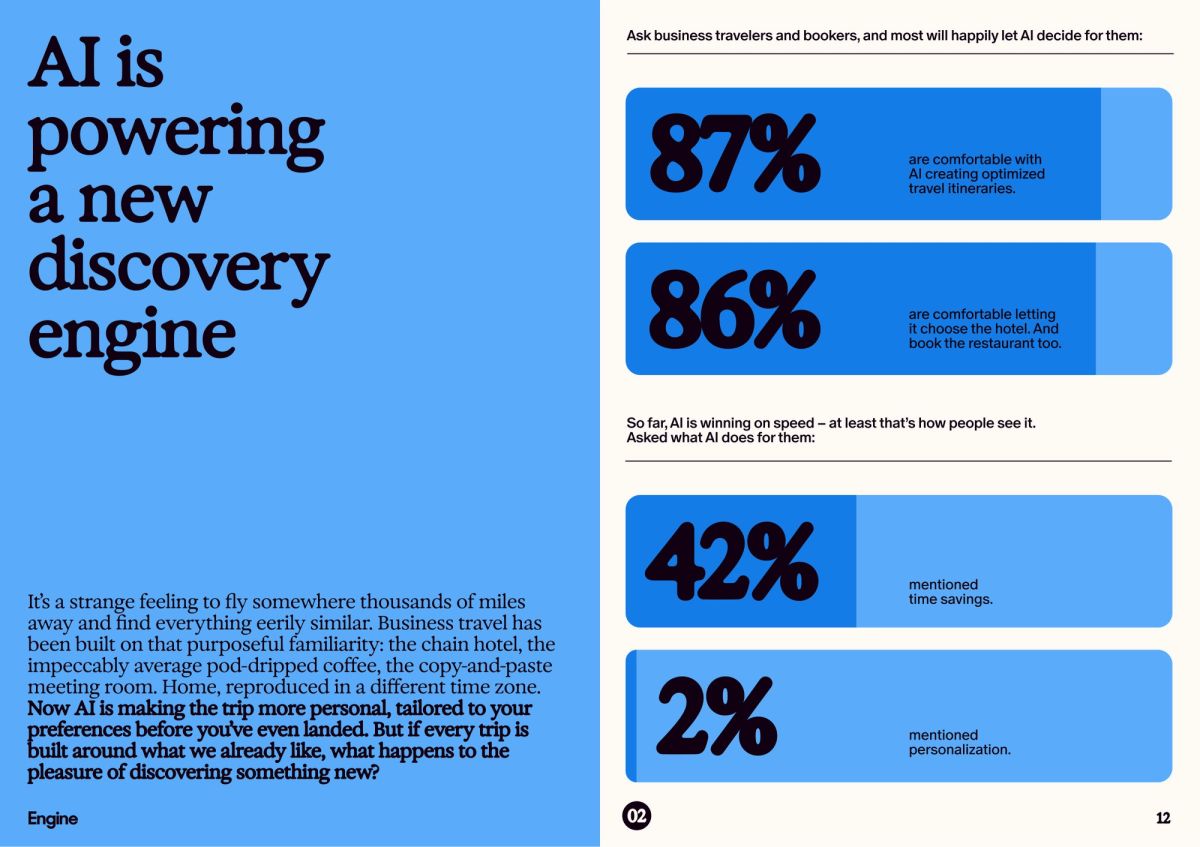
Expense reports. Travel policies. Comparing 17 almost-identical flights. Some parts of business travel are nobody’s idea of a good time. So it’s hardly surprising that we’re happy to hand over the admin. But it turns out we’re willing to trust AI with much bigger decisions, too.
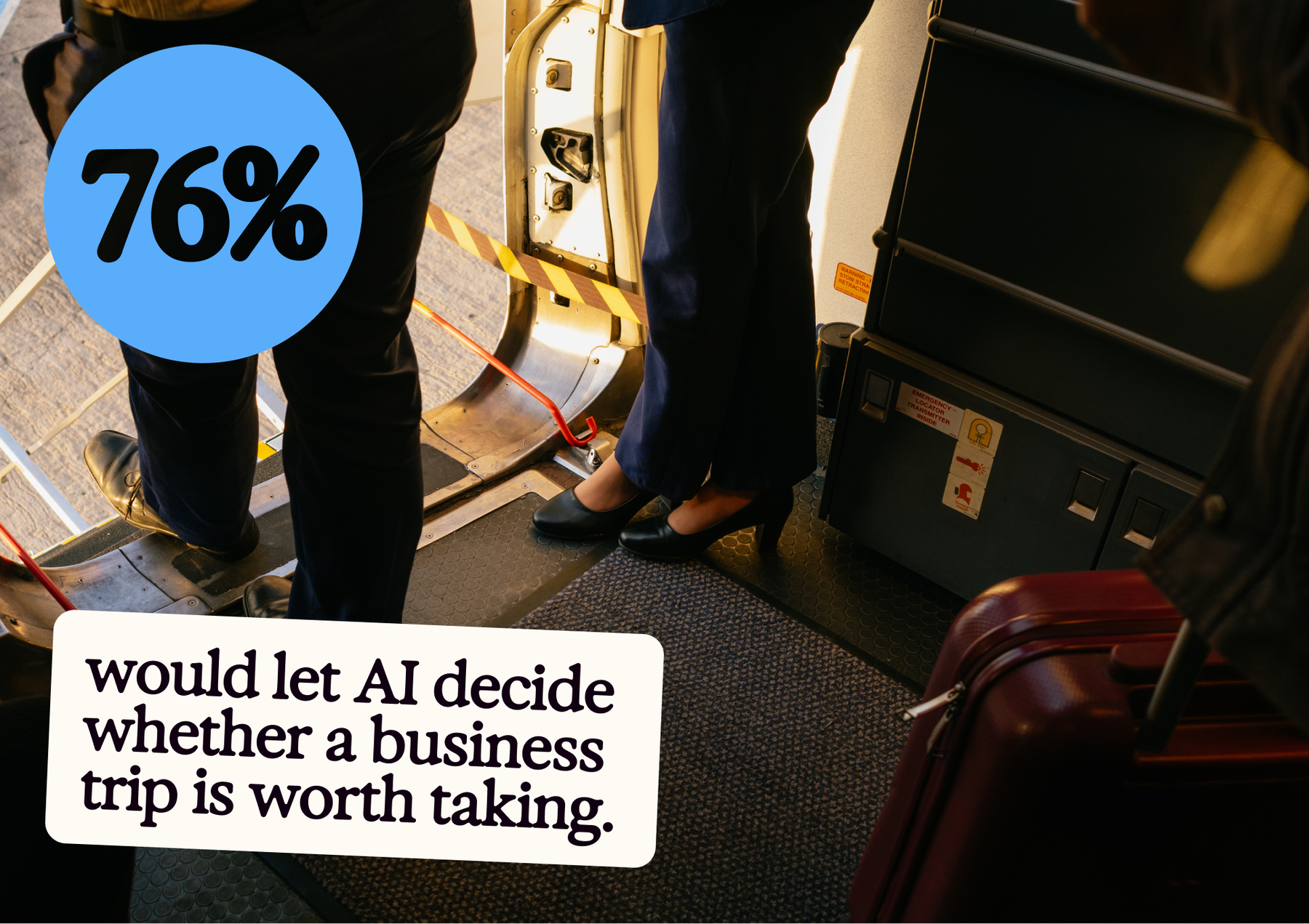
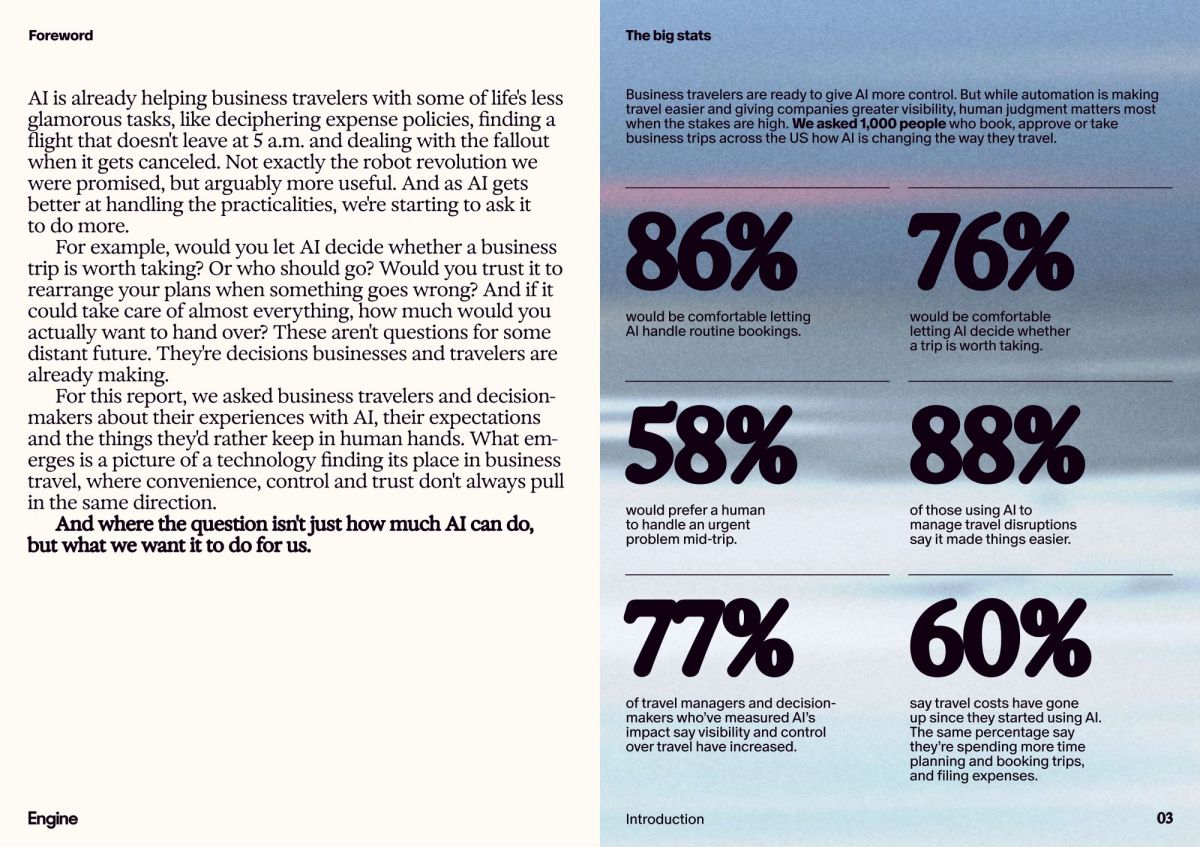
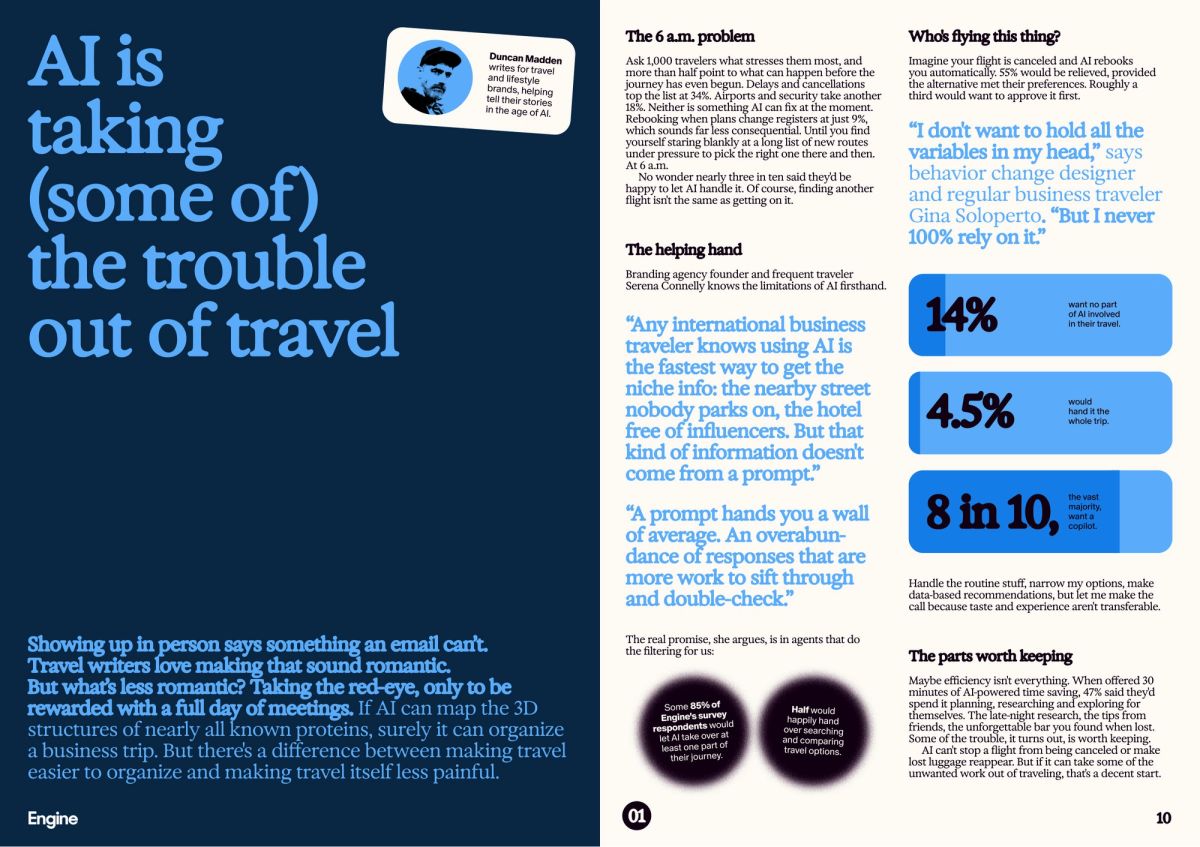
That’s a lot of faith to put in a technology that’s still finding its feet. But there are limits. When it comes to a major disruption, only 16% would let AI act without checking with them first.
Business travelers are happy to let AI make some big calls. Just not all of them.
Not yet covering the bill
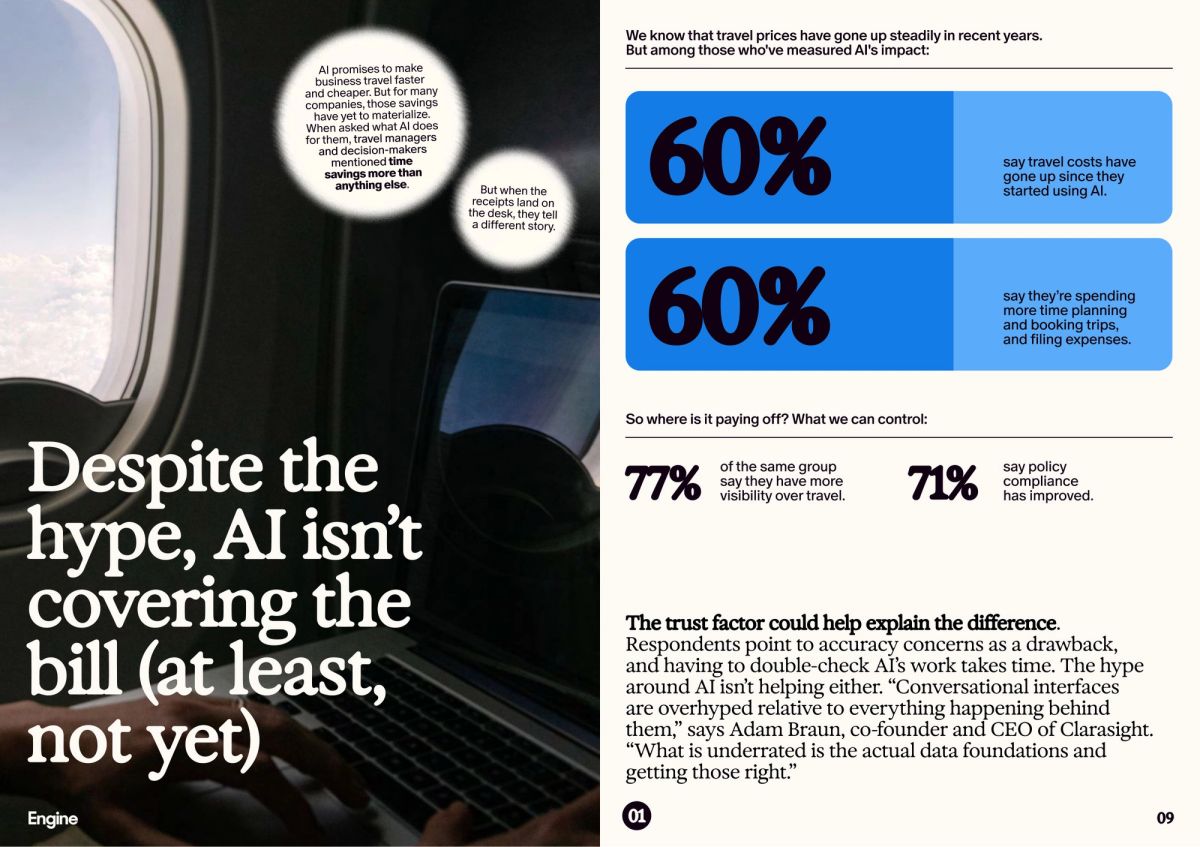
AI promises to make business travel faster, cheaper and easier. But the receipts tell a more complicated story.
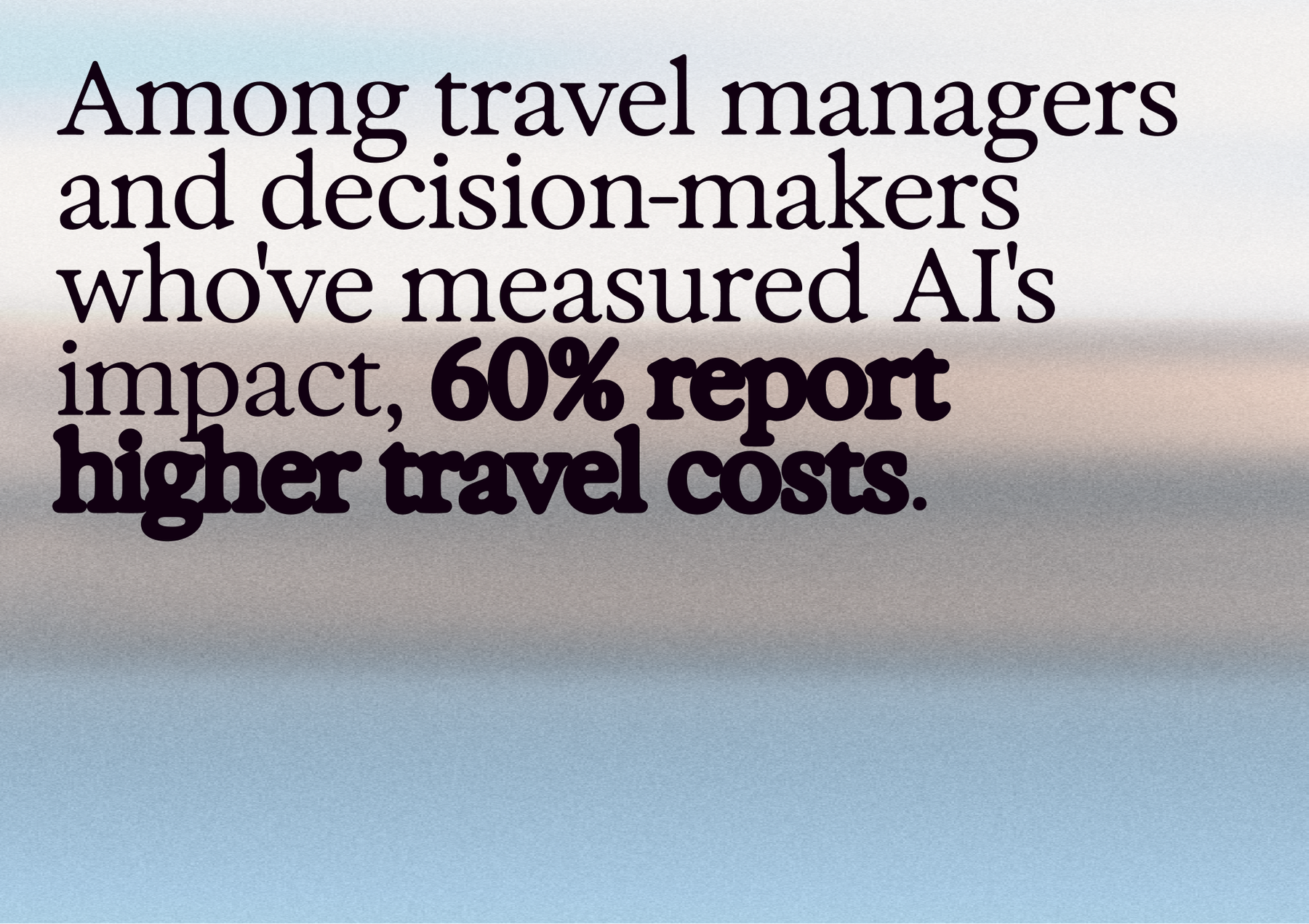
The same percentage say they’re spending more time planning and booking trips, and filing expenses.
Not quite the time-saving revolution we were promised.
But it’s not all bad news.
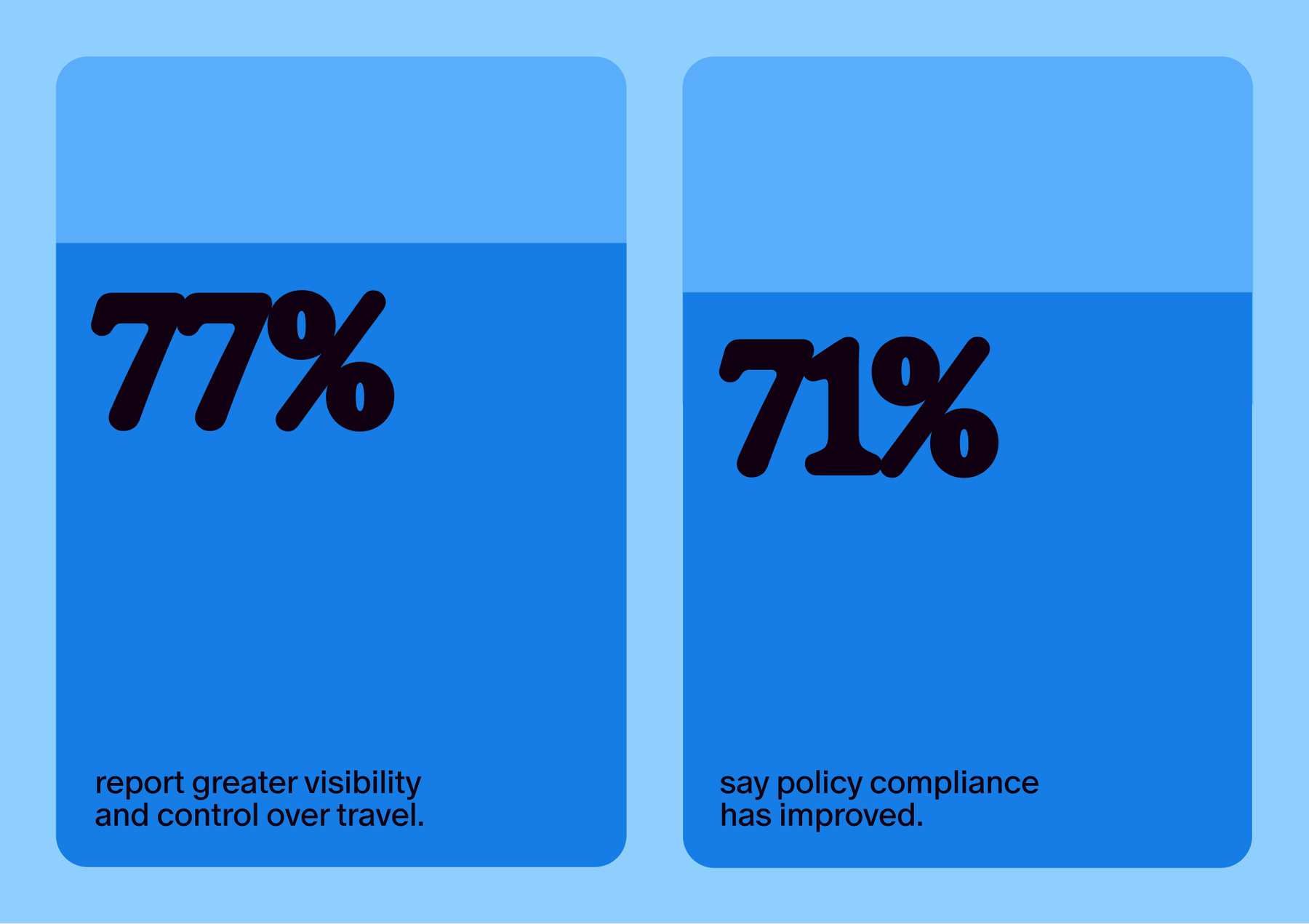
So AI is making a difference. Just perhaps not in all the ways we expected.
More reasons to leave the office?
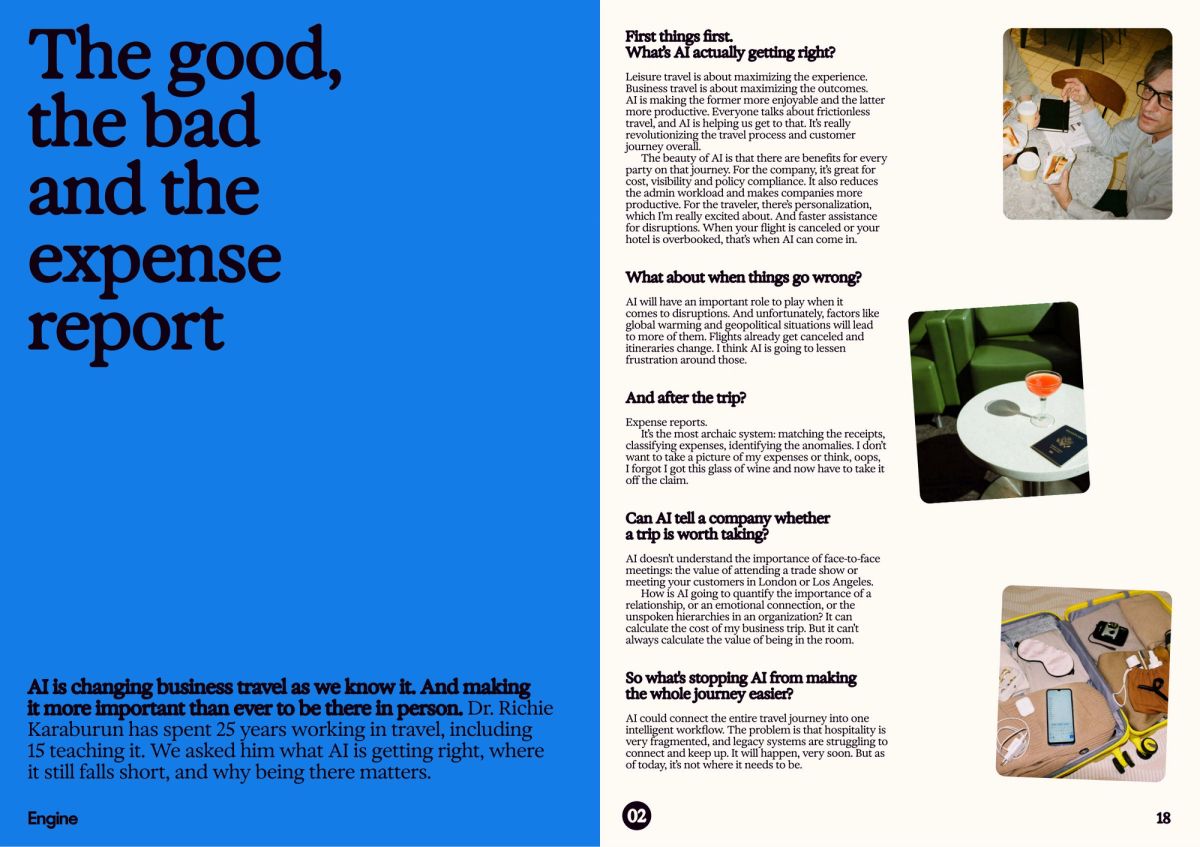
For years, technology has helped us work without being in the same room. Now it could make showing up in person more important.
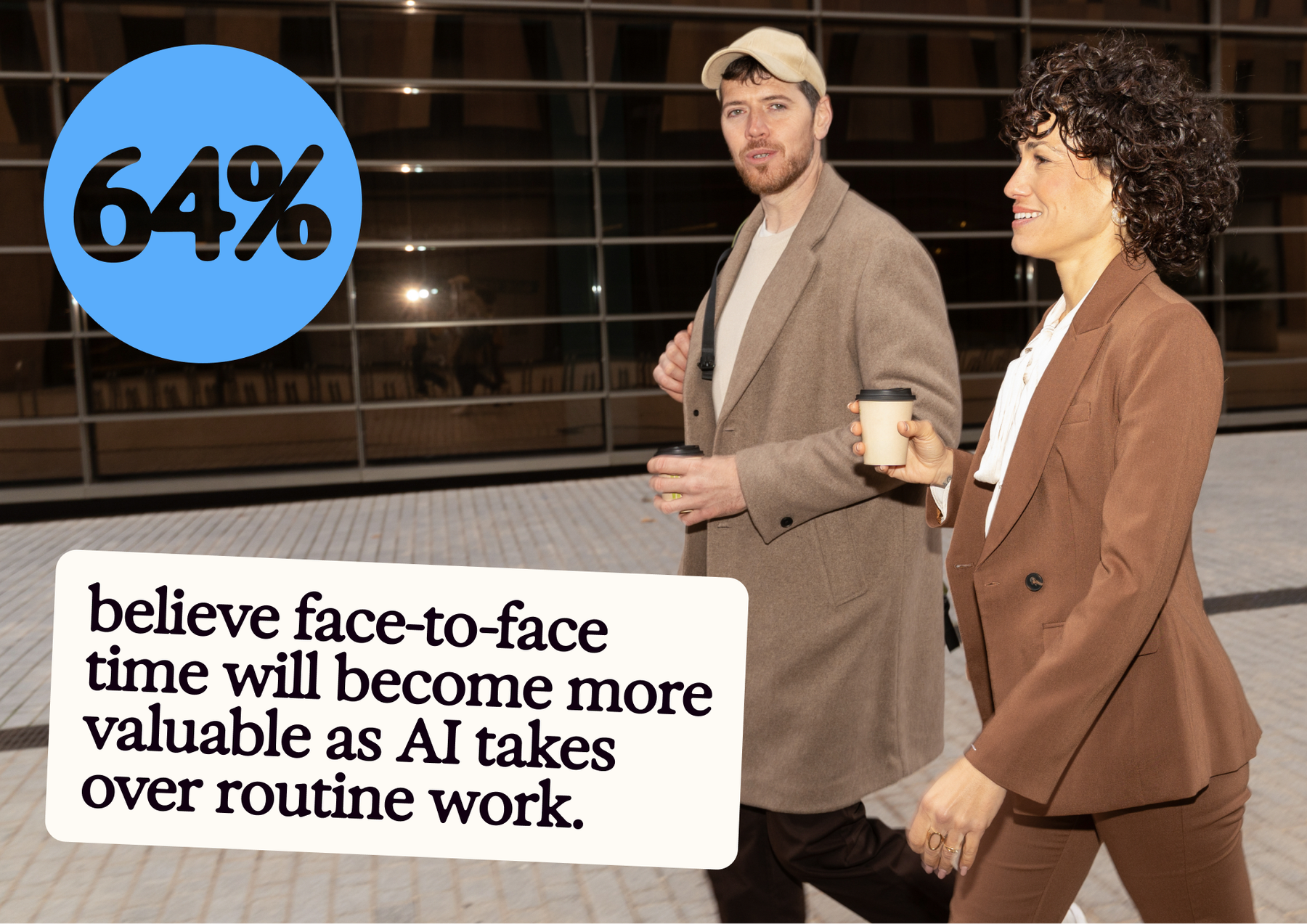
And if AI can take care of the planning, paperwork and practicalities, it frees up time for the things that make a journey worthwhile.
The conversations. The connections. The moments that don’t fit neatly into a calendar invitation.
More to unpack
From autonomous travel agents to the problem with perfect itineraries, our full report explores what happens when AI becomes part of the business trip.
And why, even as the technology gets better at helping out, some things are still worth doing ourselves.
Page 1 of 21