- The median nightly business travel rate in New York City ($337) is 2.7× the rate in Lubbock, Texas ($125). One company-wide nightly cap doesn't fit a multi-market team.
- 74% of construction company hotel bookings happen same day or next day. Across 2.7M+ bookings on Engine, 68% are placed same/next day and 89% within a week.
- 92% of published policies default to economy for air travel. Business class thresholds range from 5 to 14 hours, with private universities softer and federal agencies strict.
- Only 4% of published policies specify a minimum advance booking window. The "book 14 days ahead" rule most companies think they need is rarely actually written down.
- Among 3,300+ active Engine policies, median configured hotel caps range from $150 (Telecommunications) to $290 (Finance), a $140 spread. The right cap depends on industry, not a round number.
What is a corporate travel policy?

A corporate travel policy is a written document that tells employees how to book, expense, and behave while traveling for work. It defines what your company will pay for, what it will not, who has to approve trips, and how to handle the things that go wrong (cancellations, lost receipts, sick travelers, missed flights).
A good policy is short enough that people actually read it, specific enough that it answers the question they were going to ask anyway, and consistent with how your team actually books trips.
Of 25 published travel policies Engine reviewed, 80% require some form of pre-approval before booking, and 92% default to economy class for air travel. Whatever you write, you are joining a fairly settled mainstream.
Why your company needs a travel policy
Five reasons, in order of how often they actually matter day-to-day.
1. Cost control. Hotel rates vary more than people expect. The median nightly business hotel rate ranges from roughly $125 in smaller markets like Lubbock, Texas to $337 in New York City (Engine analysis of 2.7M+ bookings). A flat company-wide nightly cap punishes Manhattan travelers and overpays in mid-market cities. A real policy sets caps by market or pegs them to a known benchmark like GSA per diem.
2. Duty of care. If something goes wrong on a work trip, your company is on the hook. 88% of published travel policies include a duty-of-care section covering traveler safety, emergency contacts, and international travel risk. If yours does not, you are below the published baseline.
3. Tax and expense compliance. The IRS is specific about which travel expenses are reimbursable and how to document them (Publication 463 is the canonical reference). A policy that mirrors IRS rules saves your finance team weeks of cleanup at year-end.
4. Equity across teams. Without a policy, the senior salesperson books business class and the junior engineer flies basic economy with a connection. A written policy applied consistently is the simplest tool for travel equity.
5. Approval workflow speed. A policy that says "anything under $X and within these parameters is auto-approved" frees managers from rubber-stamping every flight. Most published policies require some form of pre-approval, but the smart ones only require it above a threshold.
The 14 sections every corporate travel policy needs
Every published policy Engine reviewed covered some subset of these. The strong ones cover all 14. We use them as the structure for the downloadable template above.
1. Purpose and scope
State who the policy applies to (employees, contractors, interns, board members) and who it does not. Reference any sister policies it overlaps with (corporate card, expense reimbursement, code of conduct). A common gap in shorter policies is failing to address contractors and interns, who often travel for work but operate under different employment terms.
2. Eligibility and approval
Who can travel for work, and what approval do they need before booking?
A finding that surprised us: only 1 of 25 published travel policies (4%) specifies a minimum advance booking window. The conventional wisdom that policies require travelers to book "14 days in advance" is mostly a Slack-thread myth.
Why this matters: in Engine's data, construction company hotel bookings have a median lead time of 0 days, with 74% happening same day or next day. Transportation runs even higher at 84% same/next day. If your team works in a vertical where day-of booking is the rule, a "book 14 days in advance" policy is dead on arrival. Approval gates work better than calendar minimums.
3. Booking guidelines and preferred tool
Your policy should specify how employees book. Free-for-all bookings are a recipe for missed savings, missed duty-of-care visibility, and after-the-fact reconciliation pain. 72% of published policies require employees to use a preferred booking tool, TMC, or contracted vendor list.
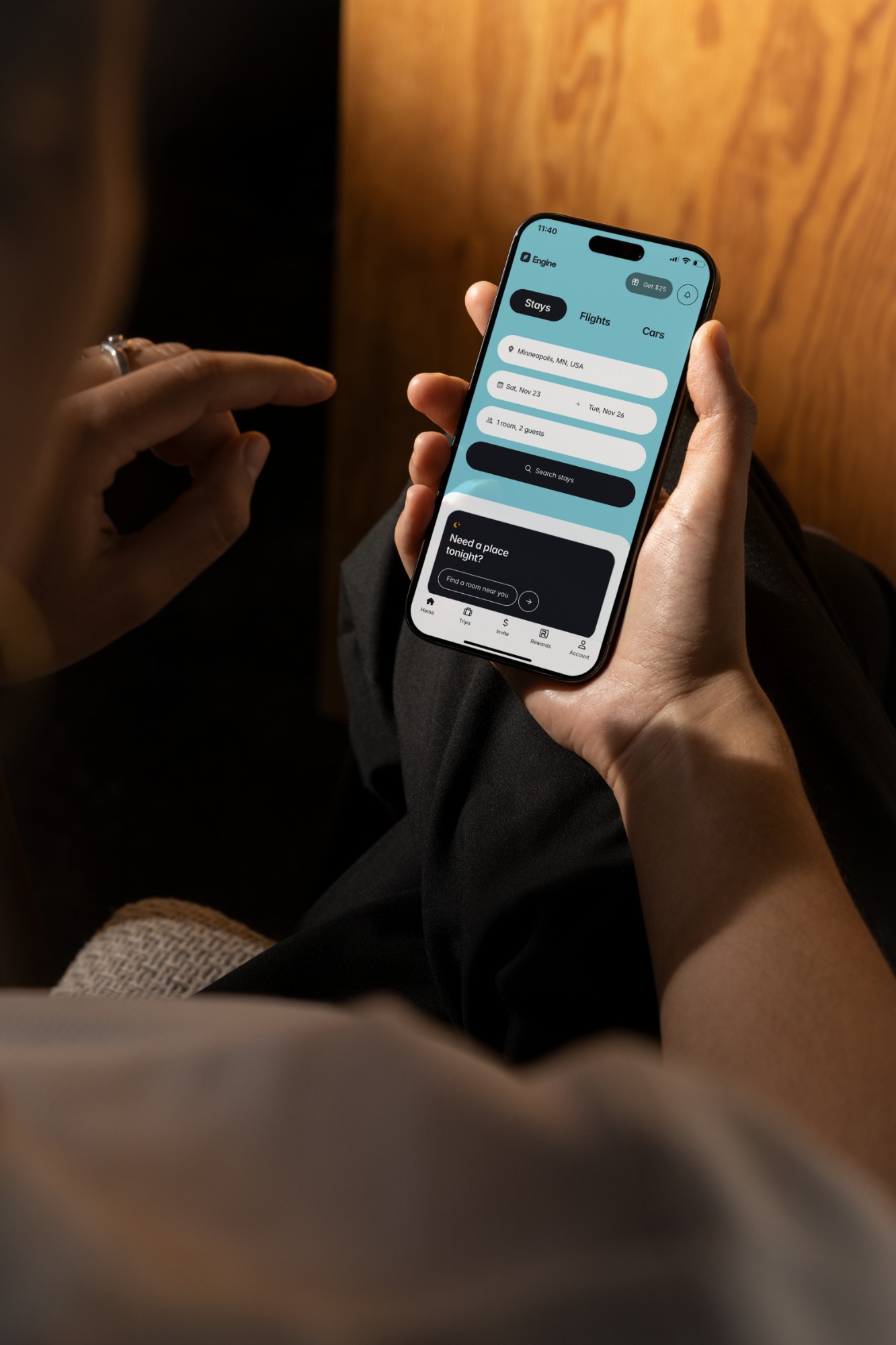
Engine is one option here, free to explore on welcome.engine.com without signing up. Travel policies in Engine are configured at the admin level: you set nightly rate caps, star-rating limits, and cabin class controls, and each rule can be set to block out-of-policy options outright, allow them with a stated reason, or route them to manager approval.
4. Air travel rules

Class of service is the most-debated section of any travel policy. The published norm across 25 policies Engine reviewed:
- 92% of policies default to economy or coach class for all flights.
- Of the 10 policies that specify a business-class threshold, the median is 8 hours of flight time. Federal agencies cluster at 14 hours (strict). Private universities cluster at 5 to 8 hours (softer).
A reasonable middle path for most companies: economy default, business class allowed for international flights over 6 to 8 hours, first class never. The template includes language for this default plus alternates if you want to be more or less generous.
5. Hotel and lodging rules
This is where company-wide nightly caps cause the most friction. The data is clear that one number does not fit every market.
| US business travel city | Median nightly rate |
|---|---|
| New York City | $337 |
| San Diego | $178 |
| Nashville | $153 |
| Denver | $152 |
| Las Vegas | $151 |
| Atlanta | $149 |
| Phoenix | $148 |
| Dallas | $144 |
| Orlando | $139 |
| Houston | $137 |
| Lubbock, TX | $125 |
| Oklahoma City | $116 |
Source: Engine analysis of 2.7M+ US business hotel bookings, trailing 12 months.
Two reasonable options for setting hotel caps:
- Tie caps to GSA lodging per diem rates, which already vary by city
- Set tiered caps (e.g., $200/night standard, $350/night for premium markets, exceptions require approval)
See real data: median hotel rate caps companies actually set, by industry
Market rates tell you what your travelers pay. Knowing what other companies in your industry have already capped helps you set a number that is neither punishing nor permissive. The chart below shows median configured hotel rate caps across 3,300+ active Engine customer policies, broken out by industry.
Max nightly hotel rate caps by industry
Use this as a sanity check. If your industry median is $175 and you are about to set yours at $300, that is a flag worth investigating.
6. Ground transportation
Rideshare, taxi, rental cars, mileage. The published norm:
- Rideshare and taxi reimbursable when reasonable
- Rental cars limited to mid-size or smaller unless equipment requires larger
- Personal car mileage at the IRS standard business mileage rate (published at IRS.gov, currently around $0.70 per mile)
- Public transit and airport shuttles always reimbursable
7. Per diem and meals
The decision here is whether to use a per-diem allowance or reimburse actual receipted meal costs.
76% of published policies use GSA per-diem rates. GSA publishes M&IE rates by city and updates them yearly, the path of least resistance. The 2026 standard tier is $68/day for most US cities, $86 for New York City, higher for premium markets like San Francisco.
8. Reimbursable vs. non-reimbursable expenses
The shorter this list is in your policy, the more questions your finance team will field. The default published norm:
| Reimbursable | Not reimbursable |
|---|---|
| Economy airfare and reasonable upgrades for international | First-class flights, paid seat selection beyond standard economy |
| Hotel room rate, taxes, and fees | Mini-bar, in-room movies, premium TV |
| Ground transport (rideshare, taxi, rental, transit) | Personal car repairs, traffic tickets, parking violations |
| Meals up to per-diem or daily cap | Alcohol beyond reasonable client entertainment |
| Wi-Fi for work, business phone calls | Personal phone calls, spa services |
| Conference fees, business meeting costs | Spouse or family travel expenses |
9. Corporate cards and cash advances
Specify whether travelers use a company card, a personal card with reimbursement, or both. If you issue corporate cards, state who is eligible, what the limits are, and what happens if a charge is non-reimbursable (typically the cardholder owes the difference).
10. International travel
International travel needs its own subsection because the rules are different. The template covers required pre-trip approval (always), passport/visa/vaccination requirements, currency conversion and FX fees, international phone plans, duty of care registration, and country-specific risk advisories.
This is also where a managed booking platform earns its keep. Engine surfaces every booked trip on a Safety page, with destination, traveler contact, and risk-flagged itineraries pulled from International SOS feeds. When something goes wrong on an international trip, the difference between one screen with every traveler's booked location and a folder of forwarded confirmation emails is the entire definition of duty of care.
11. Personal time and bleisure

Bleisure is a common gap in published policies. Most older policies say nothing, which leads to constant one-off questions. Decide and write down: can employees extend a business trip for personal time (yes, with approval)? Who pays for additional nights (employee, always)? Can a spouse or partner travel along (yes, employee covers incremental cost)?
72% of published policies address spouse or family travel in writing. Most just clarify that the employee is responsible for the incremental cost.
12. Safety and duty of care
This is the section that exists for the day something goes wrong. 88% of published policies include a duty-of-care section, making it one of the most consistently covered topics across the audit.
A complete section addresses who travelers contact in an emergency, where their itinerary is registered, insurance coverage, high-risk destination protocols, incident reporting, and mental-health support during long or stressful travel.
13. Sustainability
This is the section most published policies still skip. Of 25 policies reviewed, only 20% (5 of 25) include a sustainability section, and every one of them was a university or hospital. Zero federal, state, municipal, IGO, or corporate policies in the audit addressed sustainability in writing.
14. Enforcement and violations
What happens if someone books outside policy? Three options:
- Soft enforcement: travel still gets booked, manager gets notified, expense is flagged for review
- Hard enforcement: out-of-policy bookings are blocked at the booking step
- Reimbursement enforcement: out-of-policy expenses are not reimbursed unless approved
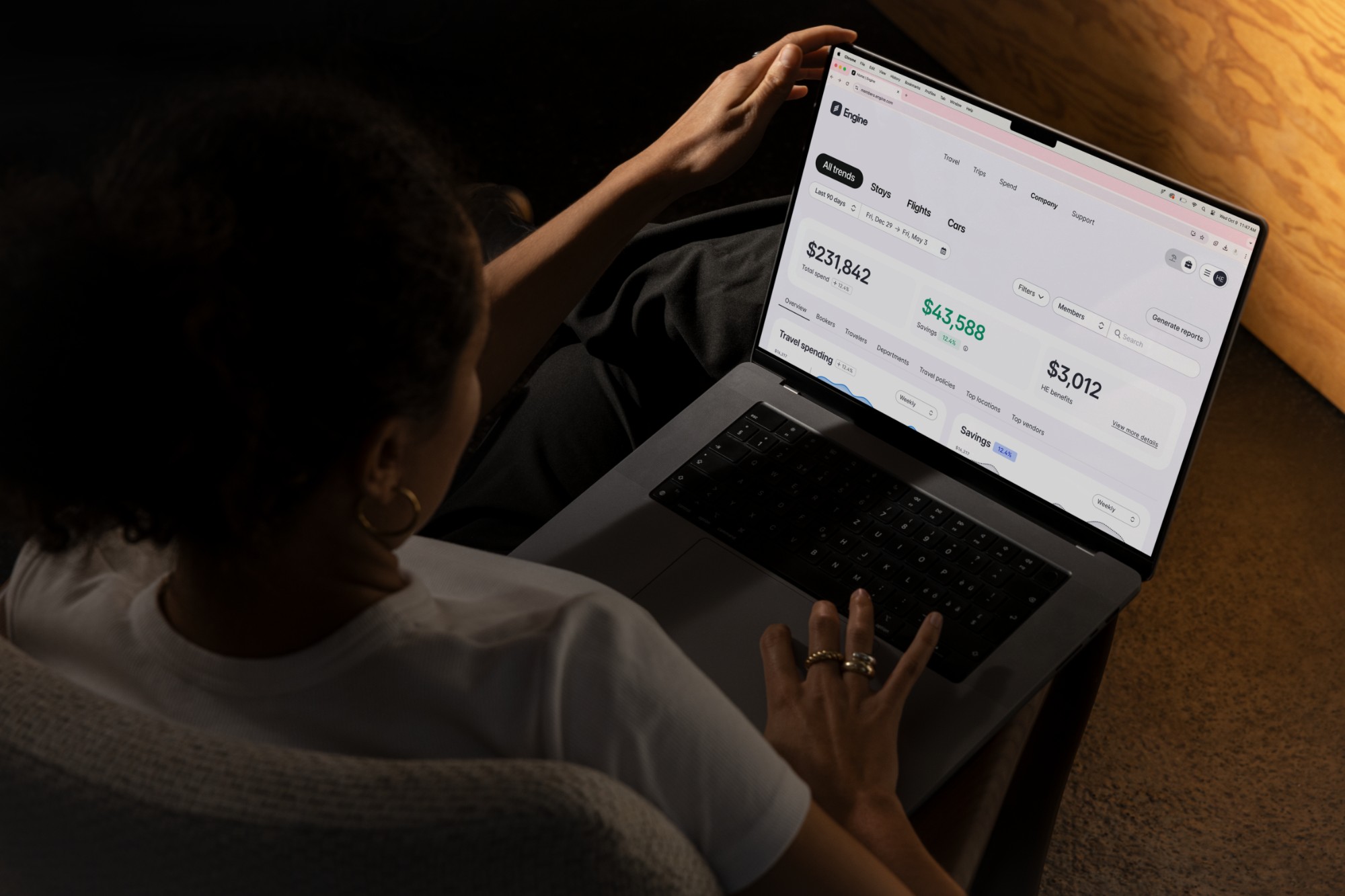
If you use Engine, these three options map directly to the Block, Allowed with Reason, and Approval settings in the admin dashboard. Each can be set per department.
Sample Corporate Travel Policy Template (copy-paste ready)
Below is a condensed version of the full template linked above. Edit the [BRACKETED] fields to fit your company. The full Word version includes longer language, exhibits, and an editable nightly-cap table.
1. Purpose and scope. This policy applies to all [COMPANY NAME] employees and contractors traveling for work. It covers booking, expense, safety, and conduct on company-related travel.
2. Eligibility and approval. All work travel requires manager pre-approval before booking. Trips with a total estimated cost above $[THRESHOLD, e.g. $1,500] require written approval from a director-level manager.
3. Booking guidelines. All travel must be booked through [PREFERRED TOOL, e.g. Engine]. Bookings made outside the preferred tool are reimbursed only with prior written approval.
4. Air travel. Economy class is the default for all flights. Business class is permitted for international flights of [6 or 8] hours or more. First class is not reimbursed. Travelers may keep frequent-flyer miles earned on company travel.
5. Hotels and lodging. Travelers should book hotels at or below the GSA lodging per-diem rate for the destination city. Standard nightly cap: $[CAP]/night, premium-market cap: $[PREMIUM CAP] for NYC, SF, Boston, DC.
6. Ground transportation. Reimbursable: rideshare, taxi, rental cars (mid-size or smaller), public transit, airport shuttles, and personal vehicle mileage at the IRS standard rate. The airport-to-home leg of a return trip is reimbursable.
7. Per diem and meals. Meals are reimbursed at the GSA M&IE rate for the destination city. Alcohol only as part of approved client entertainment. Receipts required for any single meal expense exceeding $25.
8. Reimbursable vs. non-reimbursable. See Appendix A. Business expenses incurred while traveling for [COMPANY NAME] are reimbursable. Personal expenses, family expenses, and discretionary upgrades are not.
9. Corporate cards. [COMPANY NAME] issues corporate cards to employees with regular travel responsibilities. Cardholders are responsible for any non-reimbursable charges on the card.
10. International travel. Requires written manager approval regardless of cost. Travelers must register itinerary with [DUTY OF CARE PLATFORM] before departure. Review US State Department advisories.
11. Personal time and bleisure. Employees may extend a business trip for personal time, with manager approval. Spouses and family members may accompany the traveler at no incremental cost to [COMPANY NAME].
12. Safety and duty of care. In an emergency, contact [EMERGENCY LINE] 24/7. [COMPANY NAME] provides medical and evacuation insurance through [CARRIER] for all employees on company travel.
13. Sustainability. [COMPANY NAME] encourages travelers to choose direct flights, prefer rail or transit for short-haul trips, and select hotels with environmental certifications when other factors are equal.
14. Enforcement and violations. Bookings made outside this policy may not be reimbursed. Repeated or willful violations will be reviewed by [HR / FINANCE].
Industry-specific addenda
The 14-section template above works for most companies. But a generic template breaks down for industries where work travel doesn't look like the model published policies assume. Below are addenda for the six verticals where Engine sees the biggest gaps between standard policies and how teams actually book.
Construction
- Permit same-day booking without escalation
- Allow crew bookings under a single approval
Professional services
- $175 to $400 caps by market tier
- Conference travel as a distinct category
Healthcare & clinical
- Streamline single-night approvals
- Proximity outranks rate optimization
Disaster recovery
- Surge approvals tied to declared events
- FEMA reimbursement documentation
Sports & group travel
- Separate group-travel approval lane
- Negotiated block bookings
Energy & utilities
- Permit same-day booking, no elevated approval
- Address cash-economy crew per diem
Best decision we made. We can manage costs and personnel more efficiently.
How to roll out a new travel policy in 30 days
A policy that nobody reads is worse than no policy. Use this 30-day rollout to ship, communicate, and operationalize.
- Days 1 to 7. Draft and stakeholder review. Start with the template. Edit the bracketed sections. Share with HR, finance, and one or two senior managers from your largest traveling team. Resolve disagreements about caps and class of service before publishing.
- Days 8 to 14. Tool alignment. Confirm your booking platform can enforce the policy you wrote. If your platform supports policy rules, configure them. If you booked outside a platform before, this is the moment to fix that gap.
- Days 15 to 21. Internal communication. Announce the policy in writing to all employees. Highlight the three to five things that are changing for them (not the full 14 sections). Hold one short live session for questions, recorded for new hires.
- Days 22 to 30. Soft enforcement. Allow out-of-policy bookings but flag them. Use the first 30 days to surface the patterns where your policy was wrong. Adjust before hard enforcement.
- Days 30+. Hard enforcement. Block out-of-policy bookings at the platform level. Log exceptions. Plan a quarterly review for the first year, then annual after that.