The right business charge card depends on where your money goes. A travel-heavy field team, a venture-backed startup, and a finance lead obsessed with budget controls each have a different best answer, and the seven cards below cover all of them. We verified every rate, fee, and eligibility rule against issuer materials in July 2026, so this list reflects what you can apply for today.
One disclosure before we start: Engine X is our card, and it opens the list. We think the numbers earn it that spot, but every number below got the same scrutiny. We've been just as plain about where each competitor wins.
Business charge cards differ from business credit cards in one core way. The balance is due in full every billing cycle, so there is no revolving debt and no interest. In exchange, issuers typically offer flexible spending capacity and stronger rewards. If this works for how your business spends, the seven cards below are the strongest options in 2026.
Business charge cards compared
What is a business charge card?
A business charge card is a payment card that requires the full balance to be paid at the end of each billing cycle. Unlike a business credit card, it has no revolving balance and charges no interest, and spending capacity usually flexes with your payment history and cash position instead of a fixed credit limit.
The category spans two generations. Traditional issuers like American Express and Capital One built pay-in-full cards around rewards and prestige, and they generally require a personal guarantee and a personal credit check. A newer group, including Ramp, Brex, BILL Divvy, and Engine X, underwrites the business itself, skips the personal guarantee, and bundles in spend-management software.
The 7 best business charge cards for 2026
One housekeeping note before the list. American Express closed the Plum Card to new applicants in March 2026, so it doesn't appear here even though it still tops many older roundups.
1. Engine X: best for business travel
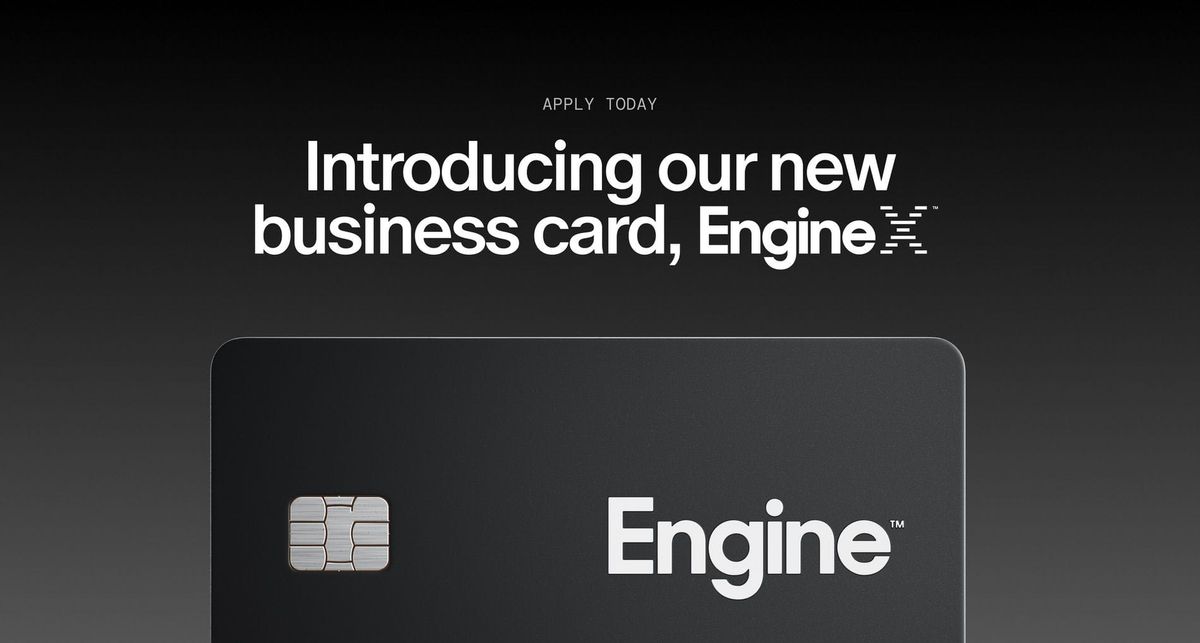
Engine X is the charge card from Engine, the travel platform more than 33,000 businesses have used to book work trips. If your business spends a lot on travel each year, the math here is hard to beat. Rewards on Engine travel start at 6% back in points and climb with annual spend, up to 10% back in points on eligible Engine travel.² Everything else earns 1.5% back in points.²
- Rewards: 6% back in points on Engine travel at the entry tier, rising to 7% above $250K in annual spend, 8% above $2.5M, and up to 10%² above $5M. 1.5% back in points on all other purchases.² New cardholders who activate the card and spend $2,000 in the first 30 days earn 20,000 Engine points.³
- Annual fee: none.¹
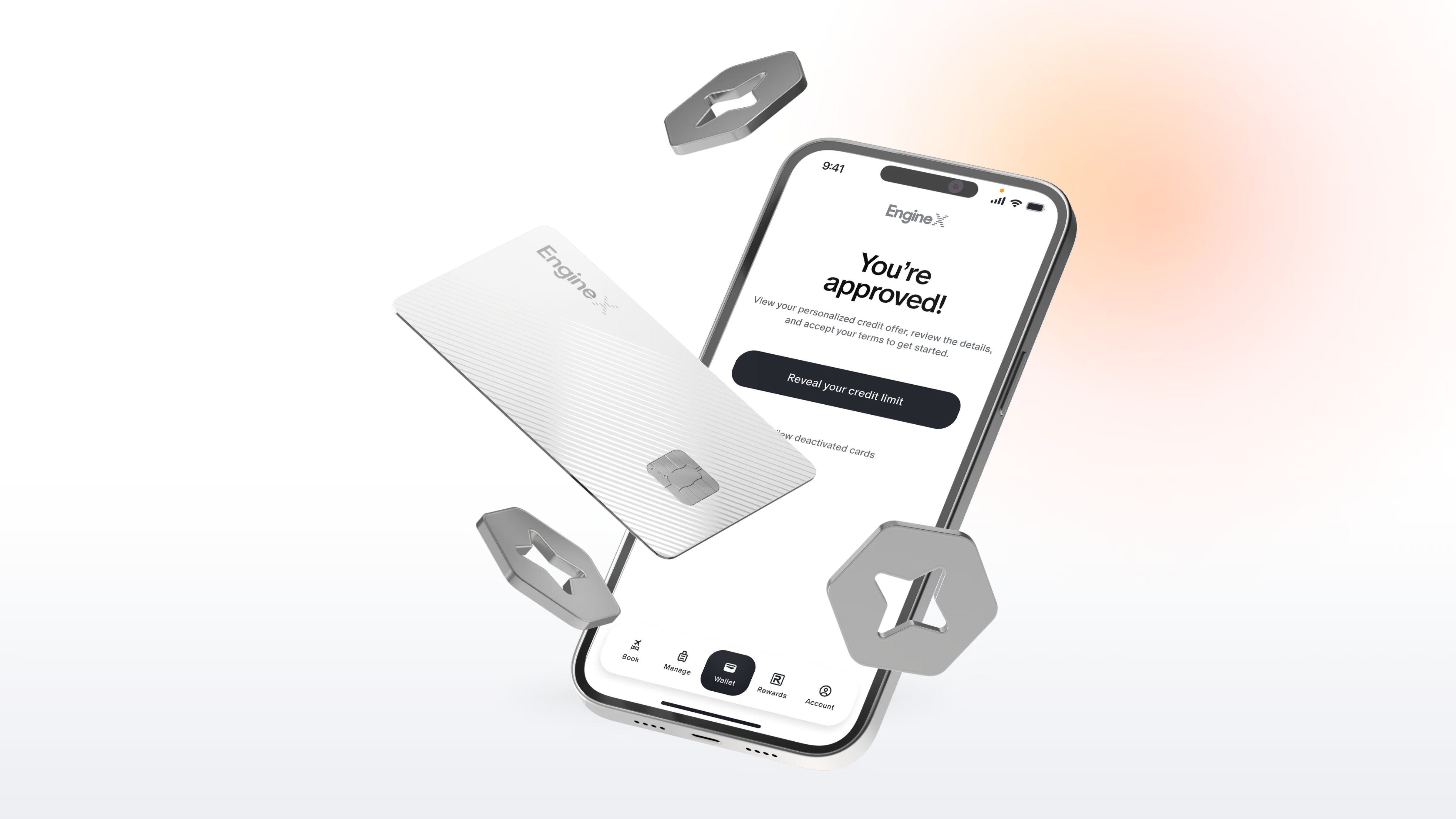
- Eligibility and credit: U.S.-incorporated businesses (LLC, corporation, or LLP). Sole proprietors and unincorporated businesses are not eligible. There is no personal guarantee and no personal credit check required. The application takes about 15 minutes inside the Engine platform, and most businesses receive a decision and an assigned line of credit within 24 hours.
- Extras: virtual and physical cards issued as needed, spending controls by employee, category, and transaction, and a QuickBooks Online integration.
- Watch for: rewards are points rather than cash, and the higher travel rates apply specifically to bookings made through Engine. You don't need to move all of your travel spend to Engine to benefit; even booking part of it, like lodging, earns the rate on that spend.
Apply for Engine X if your business spends a lot on travel; the application page covers eligibility in detail.
2. Capital One Spark Cash Plus: best for flat-rate cash back
Spark Cash Plus is the simplest big-bank option on this list. Every purchase earns unlimited 2% cash back, hotels and rental cars booked through Capital One Travel earn 5%, and purchasing power adapts to your spending and payment behavior rather than a preset limit.
- Rewards: 2% cash back on all purchases and 5% on hotels and rental cars booked through Capital One Travel, with a welcome bonus of $2,000 for spending $30,000 in the first three months.
- Annual fee: $150, refunded every anniversary year your business spends $150,000 or more.
- Eligibility and credit: excellent personal credit expected, with a personal guarantee and a hard credit pull, which is typical of traditional issuers.
- Watch for: the fee structure only makes sense at higher spend. Businesses putting less than roughly $150K per year on the card are paying $150 for a flat 2% they could approximate elsewhere without the fee.
3. American Express Business Platinum: best for premium travel perks
The Business Platinum is the premium travel card of the set, and it now carries a premium price after its fee rose to $895 in the 2025 refresh. Flights and prepaid hotels booked through Amex Travel earn 5x points, and the long menu of statement credits (airline fees, hotels, CLEAR Plus, software subscriptions) can offset the fee for businesses that use them.
- Rewards: 5x Membership Rewards points on flights and prepaid hotels booked through Amex Travel, 1.5x on eligible large or category purchases up to a cap, and 1x on everything else.
- Annual fee: $895.
- Eligibility and credit: personal guarantee and personal credit check required.
- Watch for: Pay Over Time is enabled by default, which lets balances revolve at credit-card APRs. Let a balance ride and your pay-in-full card starts charging interest like any credit card, so treat it as a charge card and pay in full.
4. American Express Business Gold: best for category spenders
The Business Gold suits companies whose spending concentrates in a few predictable categories. It earns 4x points on your two highest spend categories each billing cycle, selected automatically from a list that includes advertising, software and cloud, gas, restaurants, transit, and U.S. wireless.
- Rewards: 4x points on your top two eligible categories each cycle, on the first $150,000 in combined purchases per year, then 1x.
- Annual fee: $375.
- Eligibility and credit: personal guarantee and personal credit check required.
- Watch for: the 4x categories are chosen for you based on where you spent most, and the $150K annual cap limits the upside for larger businesses.
5. Ramp: best for expense automation
Ramp pairs a charge card with a full expense-management suite included on the base tier, and for a lot of finance teams the software is the product. Receipt matching, approval flows, and accounting sync come standard, and the card itself carries no annual fee.
- Rewards: up to 1.5% cash back. As of mid-2026 the disclosed range runs from 0% to 1.5%, with the rate set per customer during underwriting, so confirm yours before counting on it.
- Annual fee: none on the base tier; paid software tiers start at $15 per user per month. Note that standard bill payments still carry per-transaction fees (about $0.59 per ACH payment and $1.99 per check), so "no annual fee" is not the same as fee-free.
- Eligibility and credit: registered U.S. entities with an EIN and at least $25,000 in a connected U.S. business bank account. No personal guarantee or personal credit check. Sole proprietors are not eligible.
- Watch for: Ramp monitors your linked bank balance daily, and spending capacity can drop mid-cycle if cash dips. The advertised "up to 5% savings" figure describes total platform savings, not the rate the card earns.
6. Brex: best for venture-backed startups
Brex underwrites on business financials, so a well-funded startup with no revenue can still qualify for meaningful spending capacity. Founders apply with an EIN, personal credit is neither used nor reported, and the card supports local-currency issuance in more than 50 countries. Capital One completed its acquisition of Brex in April 2026, though Brex still operates as its own brand for now.
- Rewards: up to 8x points on rideshare, 5x on travel booked through Brex, 4x on restaurants, 3x on recurring software, and 1x on everything else, with top multipliers tied to paying daily from a Brex business account.
- Annual fee: none.
- Eligibility and credit: U.S.-registered corporations, LLCs, and LLPs; no sole proprietors. Expect a cash-balance bar of roughly $50,000 for funded startups. No personal guarantee.
- Watch for: the top multipliers apply only in the Brex Exclusive program, which requires Brex to be your sole corporate card. Split spend with any other card and rewards drop to a flat 1x, and the advertised "up to" rates also vary by business type and payment schedule. If you expect to carry more than one card, weigh how much of that spend Brex will actually earn on.
7. BILL Divvy: best for budget controls
The BILL Divvy Card is built around budgets. Every team, project, or employee gets an allocation, and cards draw from those budgets in real time. Credit lines range from $1,000 to $5 million, which makes it one of the more accessible corporate charge cards for smaller businesses.
- Rewards: up to 7x points on restaurants, 5x on hotels, 2x on recurring software, and 1.5x on everything else when you bill weekly, with multipliers applying to the first $5,000 a month in those categories.
- Annual fee: none, and the software is included.
- Eligibility and credit: flexible underwriting that considers revenue and time in business, with a soft pull on personal credit. That soft pull makes it the outlier among the fintech cards here.
- Watch for: the rewards program has real strings. Top rates require weekly billing, you need to spend at least 30% of your credit line monthly to earn, and points stay locked until you've held the card for 12 months and banked 5,000 points.
Two more worth a look
Rho offers up to 1.5% back as statement credits with no annual fee, no personal guarantee, and, unusually, no minimum revenue or balance requirement. This makes it worth a look if Ramp's $25K bank-balance bar or Brex's funding profile rules you out.
Coast is the specialist pick for companies that operate vehicle fleets. It combines fuel savings of up to 9 cents per gallon at 30,000+ partner stations with 1% cash back on non-fuel spend. Coast also has telematics integrations that flag suspicious fuel transactions and per-driver controls, at $4 per active user per month.
What businesses spend on travel, from Engine booking data
Hotel prices are one of the clearest signals of where travel budgets are headed, so we looked at aggregated, anonymized booking data across Engine to see where rates have moved. The average nightly rate businesses pay through Engine reached roughly $155 in the first half of 2026, up about 5% from a year earlier, and has been trending to multi-year highs this spring.
The broader market agrees. GBTA projects global business travel spending reached a record $1.57 trillion in 2025 and will grow another 8.1% in 2026, while Deloitte's corporate travel study found 68% of travel managers expected bigger travel budgets in 2026. Travel is growing as a share of card spend for most businesses, which is exactly why it deserves more weight in your rewards math than a generic flat rate gives it.
How to choose a business charge card
1. Start with where your money goes. Pull six months of card statements and bucket the spend. Businesses with heavy travel spend earn much more from Engine X's travel tiers or BILL Divvy's hotel multiplier, while those with spending across a wide range of categories could benefit from cards like Spark Cash Plus.
2. Check eligibility before you fall for a rewards table. Sole proprietors are excluded from Engine X, Ramp, Brex, and Rho. Ramp wants $25,000 in the bank, Brex favors funded companies, and the traditional issuers want strong personal credit.
3. Decide how you feel about a personal guarantee. Amex and Capital One tie the card to your personal credit. Engine X, Ramp, Brex, and Rho underwrite the business and leave your personal file alone. If protecting personal credit matters, that quickly narrows the list.
4. Read the rewards terms, not the headline. Caps, billing-frequency conditions, redemption locks, and underwriting-set rates all appear in this list. The right question is what your business would have earned last quarter, not what the best case pays.
5. Weigh the software. Spend controls, virtual cards, and accounting integrations save admin hours every month. The fintech cards include them; the traditional issuers mostly don't.
Frequently asked questions
Do business charge cards have spending limits?
Not preset ones in the traditional sense. Most charge cards use flexible spending capacity that adjusts with your payment history, cash position, and spending patterns. Fintech issuers like Ramp and Brex set capacity from your bank balance or financials, and it can move as those change.
Do business charge cards charge interest?
No, as long as the card works the way a charge card is designed to. The balance is due in full each cycle, so nothing revolves and no interest accrues. Watch hybrid features, though. Amex's Pay Over Time and Spark Cash Plus's balance-carry provisions can add interest to what is otherwise a pay-in-full card.
Do business charge cards affect your personal credit?
It depends on the issuer. American Express and Capital One require a personal guarantee and run a hard personal credit pull. Engine X, Ramp, Brex, and Rho underwrite the business and skip the personal credit check entirely, and BILL Divvy sits in between with a soft pull that doesn't affect your score.
Can a small business or sole proprietor get a charge card?
Small businesses, yes. Incorporation matters more than size: an LLC with modest revenue can qualify for Engine X, Divvy, or Rho. Sole proprietors have fewer options, since most corporate charge cards require a registered entity, so a traditional business credit card is often the more realistic path until you incorporate.
Are corporate cards the same as business charge cards?
They overlap. Most modern corporate cards (Ramp, Brex, Divvy, Engine X) are structured as charge cards, since the balance is due in full each cycle. "Corporate card" usually signals business-based underwriting, no personal guarantee, and bundled spend-management software, while traditional charge cards from Amex or Capital One are underwritten against the owner's personal credit.
What are the disadvantages of a business charge card?
The pay-in-full requirement is the main one. If your business needs to finance purchases over time, a charge card may not be the best solution, as late balances trigger fees or account freezes. Eligibility is also stricter, since several of the best cards exclude sole proprietors and set cash or credit bars.
The bottom line
The Plum Card's exit made room at the top of this category, and what replaced it is a stronger field than the old lists suggest. Match the card to your spending mix, confirm you clear the eligibility bar, and let the rewards follow the spend you already have. If travel is where your card works hardest, see what Engine X would earn on your bookings.