Market data revealing why SMBs are leaving money on the table without dedicated travel management
Global business travel spending is forecast to reach $1.71 trillion in 2026, a projected 7.2% increase over the previous year. Yet a striking gap persists: while nearly three-quarters of enterprise companies use dedicated travel management platforms, only 21% of small and midsize businesses do the same. This disparity means SMBs can face higher costs, greater administrative burdens, and employees covering expenses out of pocket. The statistics below show where SMB travel programs can lose money and time, and what the data says about improving travel management.
Key Takeaways
- SMBs lag significantly in platform adoption: Only 21% of SMBs use a dedicated travel management platform, compared to 73% of enterprises, creating a 52-percentage-point gap in cost control capability.
- Administrative burden is substantial: The average employee spends 94 hours per year on travel administration, more time than most Americans receive in paid vacation days.
- Employees absorb unreimbursed costs: 42% of SMB travelers have gone unreimbursed for more than $250 of their own money in a single year.
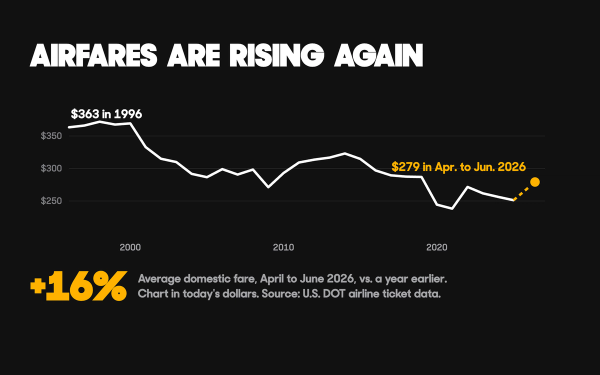
- Travel costs are rising faster than inflation: Business travel inflation reached 5.1% year-over-year in H1 2026, nearly double the 2.7% headline CPI.
- Policy violations drain budgets: Out-of-policy bookings cost the average enterprise 14.2% of total spend, a leak that compounds without enforcement tools.
- Platform adoption delivers measurable returns: SMBs using dedicated platforms spend 40% less time on travel administration than those relying on consumer booking sites.
Market Size and Growth: The Scale of Business Travel in 2026
Business travel represents a significant portion of the global economy, with spending volumes that dwarf most industry categories. For small businesses, these market-level figures establish the stakes: participating in business travel is essential for growth, but managing it poorly means competing at a disadvantage.
1. Global business travel spending is forecast to reach $1.71 trillion in 2026
The 2026 GBTA Business Travel Index forecasts worldwide business travel spending at $1.71 trillion, representing a projected 7.2% increase from 2025. The forecast reflects continued demand for business travel alongside higher transportation and travel costs.
2. U.S. business travel spending is forecast at $423 billion in 2026
The 2026 GBTA Business Travel Index forecasts U.S. business travel spending at $423.0 billion in 2026, making the United States the world’s largest business travel market by projected spending. For SMBs operating primarily in the U.S., the scale of the market reinforces the importance of controlling travel costs as prices rise.
3. Global spending projected to surpass $2 trillion by 2030
Looking ahead, the GBTA projects business travel spending will exceed $2 trillion by the end of the decade. This trajectory means travel programs established today will need to scale, making early investment in management infrastructure increasingly valuable.
4. Approximately 1.84 billion business trips are projected globally in 2026
GBTA projects approximately 1.84 billion business trips worldwide in 2026, up 1.3% from an estimated 1.82 billion trips in 2025. Spending is expected to grow considerably faster than trip volume, reflecting the impact of higher travel costs.
5. 42% of business travelers who fly typically use premium cabins
Air travel remains the dominant transportation mode for business travelers, and 42% of flyers surveyed by GBTA said they typically traveled in premium cabins. The figure highlights the importance of airfare and cabin-class policies when companies manage travel budgets.
The SMB Platform Adoption Gap: Where Small Businesses Fall Behind
The most significant finding in 2026 travel data is the dramatic difference between how large enterprises and small businesses manage travel. This gap translates directly into cost differences, administrative burden, and employee experience.
6. Only 21% of SMBs use a dedicated travel management platform
Among companies with fewer than 500 employees, just 21% use a dedicated platform for managing business travel. The remaining 79% rely on consumer booking sites, manual processes, or no systematic approach at all.
7. 73% of large enterprises use dedicated travel platforms
In contrast, 73% of large companies have adopted dedicated travel management solutions. This 52-percentage-point gap means enterprises consistently capture savings and efficiencies that SMBs forfeit.
8. 67% of SMB employees book business travel entirely on their own
Without centralized platforms, 67% of SMB employees handle their own travel bookings, compared to just 32% at large enterprises. Self-booking without policy guardrails typically results in higher costs and inconsistent vendor selection.
9. 45% of companies without platforms cite being "not big enough"
Among SMBs that have not adopted a travel platform, 45% say they believe their company is not large enough to need one. This perception persists despite evidence that platform benefits scale down effectively to smaller organizations.
10. 66% of SMB admins say platform ROI is hard to justify
Two-thirds of SMB administrators struggle to justify the return on investment for dedicated travel tools. This hesitation often stems from unfamiliarity with platforms that charge no platform fees, no membership fees, no agent-assist fees, and require no contracts or minimum spend.
Cost and Expense Reality: What SMBs Actually Spend on Travel
Travel costs continue rising faster than general inflation, putting pressure on SMB budgets. Understanding the actual cost structure helps identify where savings opportunities exist.
11. Average business trip costs about $1,128
An average business trip cost of $1,128, compared with $834 in 2024. Rising per-trip costs make budgeting, booking visibility, and travel-policy controls increasingly important for SMBs.
12. Business travel inflation hit 5.1% versus 2.7% general CPI
Travel costs are rising nearly twice as fast as overall consumer prices. Business travel inflation reached 5.1% year-over-year in H1 2026, compared to 2.7% headline CPI. This divergence makes active cost management increasingly important.
13. Corporate hotel rates rose 6.4% to a $246 national average
Corporate-negotiated hotel rates climbed 6.4% to $246 per night on average in Q2 2026. SMBs booking through consumer sites without negotiated rates typically pay above this benchmark. Platforms with pre-negotiated rates, like those accessible through Engine's booking platform, can give smaller companies additional booking options.
14. A typical three-day domestic trip costs $990 to $1,293
Standard domestic business trips range from $990 to $1,293 for a three-day itinerary including transportation, lodging, and meals. This baseline helps travel managers forecast budgets and identify outlier bookings that exceed reasonable thresholds.
15. U.S. businesses collectively spend approximately $387 billion annually on travel
Domestic business travel spending in the U.S. totals roughly $387 billion annually. Even capturing a small percentage improvement in this spending through better management represents substantial dollar savings at scale.
Administrative Burden: The Hidden Cost of Manual Travel Management
Beyond direct trip expenses, the time spent managing travel represents a significant hidden cost. For SMBs where employees wear multiple hats, this administrative burden directly impacts productivity.
16. Employees spend 94 hours per year on travel administration
The average person spends 7.8 hours monthly on business travel administration, totaling 94 hours annually. This exceeds the 11 paid vacation days the average American receives, meaning travel admin consumes more time than employees get to rest.
17. SMBs using platforms spend 40% less time on travel admin
Companies that have adopted dedicated travel platforms report 40% less time spent on administrative tasks compared to those using manual processes. For a 20-person company, this translates to hundreds of recovered productive hours annually.
18. Completing an expense report takes 38 minutes on average with a 19% error rate
Standard expense reporting requires approximately 38 minutes per report, with nearly one in five containing errors requiring correction. With DirectBill, Engine extends a line of credit, Engine pays the hotels, and the customer receives one consolidated invoice after stays.
19. 71% of salespeople spend time on non-selling administrative tasks
Sales professionals dedicate 71% of their time to administrative work rather than revenue-generating activities. Travel booking and expense management contribute to this overhead, making streamlined processes particularly valuable for sales-driven organizations.
Policy Compliance and Budget Leakage: Where Money Disappears
Without enforced travel policies, spending quickly exceeds intended budgets. The data reveals how out-of-policy bookings and inconsistent reimbursement practices drain SMB resources.
20. Out-of-policy bookings cost enterprises 14.2% of total travel spend
Bookings that violate corporate travel policies account for 14.2% of total spend on average. Travel policy enforcement that blocks non-compliant options before booking eliminates this problem entirely.
21. 42% of SMB travelers have gone unreimbursed for more than $250 annually
Nearly half of SMB employees report absorbing over $250 in unreimbursed business travel expenses each year. This hidden cost reduces employee satisfaction and may discourage necessary business travel.
22. 65% of business travelers say their companies require or encourage managed booking
The majority of business travelers, 65%, report that their employers require or encourage booking through a travel management company or corporate booking tool. SMBs that do not establish similar expectations lose the visibility and control that managed booking provides.
23. 35% of U.S. businesses engage in business travel activities
Approximately 35% of businesses participate in business travel. For companies in this segment, travel represents a core operational activity that warrants dedicated management rather than ad hoc handling.
Travel Patterns and Frequency: How Often SMBs Hit the Road
Understanding travel frequency helps right-size program investments. The data shows that business travel remains essential for most organizations, with conference and client travel dominating SMB itineraries.
24. 70% of SMBs travel to conferences and trade shows
Seven in ten small and midsize businesses report that employees travel to conferences and trade shows, compared to just 55% of large companies. This higher conference travel rate makes group booking capabilities particularly relevant for SMBs coordinating multi-person event attendance.
25. 74% of business travelers report traveling as much or more than before
Nearly three-quarters of business travelers indicate they are traveling at the same rate or more frequently than in previous years. The post-pandemic travel rebound has stabilized into sustained demand rather than temporary recovery.
26. 28% of business travelers expect to travel more in 2026
Looking ahead, 28% anticipate increasing their business travel frequency in 2026. For companies expecting growth in travel volume, establishing management infrastructure now prevents scaling problems later.
27. Most business travelers took between one and 10 trips in 2025
41% of business travelers took one or two trips in 2025, 44% took three to 10, and 15% took more than 10. The distribution shows that business travel frequency varies substantially across travelers rather than clustering around a single average.
28. 63% of U.S. business travelers surveyed have added leisure to a work trip
63% of U.S. respondents said they had added leisure travel to a planned work trip. Combining work and personal travel can create additional policy considerations around expense boundaries, trip extensions, and booking changes.
29. 86.5% of small businesses say travel is important for generating opportunities
An overwhelming majority of small businesses, 86.5%, view travel as at least somewhat important for business development. This near-universal recognition means travel is not discretionary for most SMBs but rather a competitive necessity.
30. 72.8% say travel costs significantly impact event attendance decisions
Cost sensitivity remains high, with 72.8% of small businesses reporting that travel expenses moderately or majorly affect their willingness to attend events. Companies that reduce per-trip costs can attend more events and pursue more opportunities than competitors operating without cost controls.
What the Data Means for SMB Travel Programs
The gap between SMB and enterprise platform adoption is not merely a technology difference. It represents a systematic disadvantage in cost, time, and control that compounds with every trip.
Consider the administrative impact: SMBs using a dedicated travel platform reported spending 40% less time on travel administration than SMBs without one, with median monthly admin time falling from five hours to three. Centralized booking can also improve policy consistency and spend visibility, although the dollar savings will vary by company, travel volume, and booking patterns.
The hesitation around "not being big enough" for a travel platform dissolves when the platform itself carries no platform fees, no membership fees, no agent-assist fees, no contracts, and no minimum spend. The question shifts from whether a company can afford a travel program to whether it can afford not to have one.
Closing the Gap: Where SMBs Can Start
The statistics point to specific operational changes that deliver measurable results:
- Consolidate booking through a single platform to capture pre-negotiated rates and eliminate the retail markup SMBs currently pay
- Implement travel policies that enforce themselves through systems that show only compliant options, converting guidelines into hard-stop booking rules
- Replace expense report chaos with consolidated invoicing where one statement reconciles all company travel charges
- Add cancellation protection to prevent lost dollars when plans change, a particularly common need for SMBs whose schedules shift frequently
For companies ready to explore these changes, Engine serves 39,000+ businesses with a platform designed to deliver enterprise-level control without enterprise complexity. The booking platform and Engine Groups service for nine or more rooms operate with no platform fees, no membership fees, no agent-assist fees, no contracts, and no minimum spend.
Frequently Asked Questions
What percentage of small businesses currently use travel management platforms?
Only 21% of SMBs with fewer than 500 employees use a dedicated travel management platform. This compares to 73% adoption among large enterprises, representing a 52-percentage-point gap in travel program sophistication.
How much time do employees spend on travel administration annually?
The average employee spends 94 hours per year on business travel administration, equivalent to 7.8 hours monthly. Companies using dedicated travel platforms report spending 40% less time on these administrative tasks.
What is the average cost of a business trip in 2026?
An average business trip cost of $1,128, compared with $834 in 2024. Actual trip costs vary considerably based on destination, airfare, lodging, trip length, and travel class.
How much do out-of-policy bookings cost companies?
Out-of-policy bookings account for 14.2% of total spend on average. Policy controls built into the booking process can help steer travelers toward approved options before purchases are completed.
Why do SMBs hesitate to adopt travel management platforms?
The primary barriers are perception and cost concerns. 45% of SMBs without platforms believe they are not large enough to need one, while 66% of administrators say the ROI is difficult to justify. These concerns often reflect unfamiliarity with platforms that charge no platform fees and require no contracts or minimum spend.